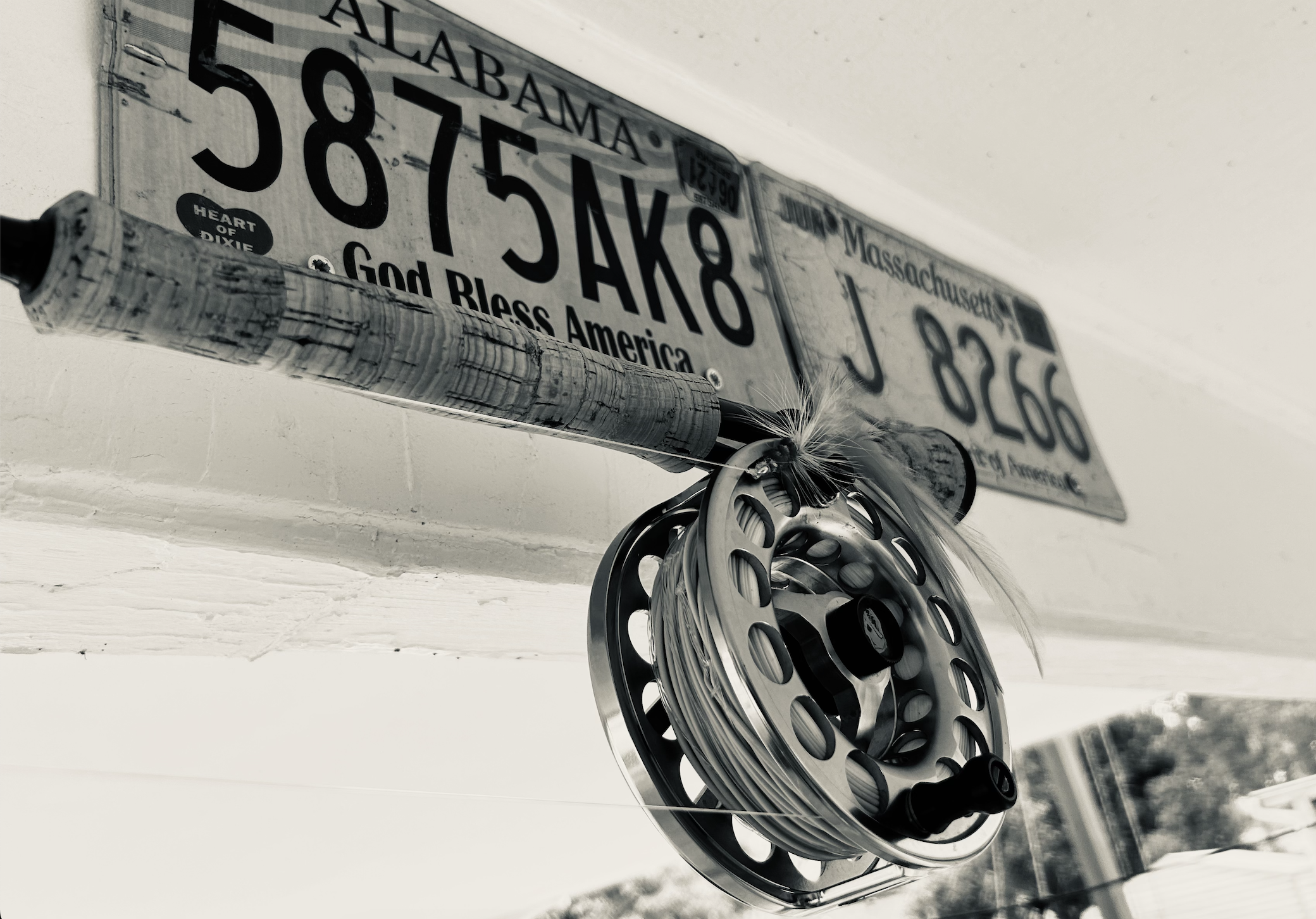
It’s early, and with the drive to his house I’ve had a much earlier start than Barry. I roll up to his house and he waves to me, an unlit cigar clenched in his teeth as he’s passing a pair of rods through the back gate of his 4Runner. It’s about as old as he is, at least in car years, and ambles along with a similar limp.
I spent the first year of my career running with my local hometown volunteer ambulance corps, and the satellite operation of a private outfit based out of Boston. I learned nothing my first year, relegated to a “Get out of the way” attitude and dialysis transports. Not so with Barry. After moving to Pinellas County, Florida at the end of 2004 I took a job in a local emergency department. Barry was assigned to me as a preceptor. A cardiac arrest rolled in that first night and when I told him I’d never done CPR before he threw me to the wolves. I learned more in a month than I had in the past year. “Crackin’ ribs your first night on the job! Kid’s a fahkin’ natural.”
Barry had been a corpsman with the First Marine Division in Vietnam. The hitch in his gitty-up was a combination of shrapnel and too many years playing semi-pro soccer in Europe (that’s futbol to us American savages). He became a Registered Nurse after realizing his playing days were over and had been wheeling and dealing in local ERs and ICUs ever since.
“It’s critical,” he’d emphatically state over some essential medical intervention, chewing a wad of gum when he couldn’t smoke a cigarette. Bilateral lines, type and cross, twelve leads, every one of them “Fahkin’critical!” Barry more or less adopted me, and the other two legs of my buddy tripod, as a surrogate sons. One of the legs tells me he cheats at golf, so I only fish with him. If we’re honest, and most fishermen are liars by default, cheating is okay as long as the hookups happen. It might even be essential. Fahkin’ critical…
There’s a case of beer in the back, condensation growing by the second in the Florida humidity. We still have to stop for ice. Depending on how the day goes, we may or may not stop at one of the restaurants with an inlet dock where we’ll get shitty on oysters, crab pate, and whiskey until we decide to sober up and bring the boat back. Otherwise, it’s cold Cubans and beers which won’t be bad because he’s already warned me that it’s going to be hot.
Barry’s not one to split hairs over the appropriate times for drinking a beer and right after I’ve ponied up for gas at the filling station in the marina he’s got one cracked beside the wheel on the center console. He sips at the suds, balancing the now-lit cigar just behind the cracked windscreen as we veer out of the channel and head for the smell of freshly-cut grass that can only mean one thing: bait.
He knows I’ve brought a fly rod, and if he’s honest, he’d rather hook a tarpon on the four inches of chicken feathers I’ve produced from the little box that’s marked ‘Poon Food, than his artificials. Bringing the boat around to the site of seagulls hovering, he passes me a cold one and limps up on the bow. He throws the casting net like a seasoned Cuban, the cigar clenched in his teeth, completing the picture. The beer is cold as the blue mountains promise, but he’s expecting me to steer while he throws the net and the in gear to neutral flip-flop that can sometimes take more than an hour.
“Waaaait,” he growls like a hound that just might have spotted a squirrel. He studies a patch of water at some distance for a moment before climbing down and taking the freshly cracked beer from my hand. “Get your rod, there’s one rolling at two o’clock.” Barry brings us about and brings us nearly parallel to the silver king. My heart is pounding as I know I’ve got one, maybe two shots at this before I spook it and it makes a run for Mexico. I manage to start a double haul despite my shaking hands as Barry slams the boat into neutral. The fly doubles over and lands too close, passing over the fish as I furiously strip.
“She’s a big fat pig,” Barry says as he slurps his beer. “You gotta get that thing in front of her, don’t bounce it off her head,” he explains as I pull back and start the cadence again. “Fahkin’ critical.”
My second attempt is in a better position, but she’s not interested. The next time she rolls, she’s farther down and closer to the beach, well out of range before I can even consider another cast.
“Ah, she’ll be back,” he assures me, but I know she’s gone. It’s not such a big deal though, it’s the middle of summer and they’ll be around until the fall at least before they head South again. In the spring they’ll show up off Boca Grande and the cycle will start again. He puts the boat back in gear and we jet off for a small cove he assures me is full of reds and trout.
Another spot of choppy water and hovering gulls piques his interest. “Get up there!” he spits, jamming the cigar back into his teeth. “Toss it right into the middle of all that shit. Let’s see what happens.”
The fly hits the water and I wait excitedly, forcing myself to count five Mississippis before I start stripping my line. I’m waiting, hoping, wishing, and praying for that telltale sign of something smacking the fly and committing to the mistake. There’s nothing, despite having pulled it through all that turbulence, nothing in all that chaos even takes notice. I’m about to pull from the water and start another cast when the line goes tight. I have enough foresight to not trout-set the hook and instead place just the lightest suggestion of tension on the line. There’s a slight tick-tick of the reel, and it starts to zing.
“Your drag!” Barry shouts. I brace the palm of my hand on the bottom of the reel and apply pressure with one hand, stuffing the butt of the rod into my armpit, and tightening down the drag knob with the other. The reel stops giving up line but I can still feel the tug on the other end as I start to pull it in. “Put him on the reel,” Barry says. “If he starts to run and you’ve got all that line around your feet you’ll be fucked eight ways from Sunday.”
“It’s no a tarpon,” I say as I bring it closer to the boat. “It’s got a little fight though.”
Barry peers over the side, gazing into the water through his polarized sunglasses. “Ladyfish,” he laments. “You wanted the big sonovabitch that was chasing it.”
He snatches it out of the water and shrugs as he pulls it off the hook. “Good bait, anyway. And they can be fun to catch when they’re big enough,” he chuckles as he tosses it into the live well. “They’re still out there. Give ‘em hell.”
I let the fly sail again, straight through the flock of seagulls and it lands just past the mess of choppy water. Barry belches as he cracks another beer “Strip it fast, make them strike on impulse.”
In this moment, we realize the game was over before it started. The sound of air puffing off our port side draws my attention and my heart sinks again. A small pod of dolphins cruises past and heads straight for the school, scattering it every which way. Once they show up, giving chase to the bait, whatever predatory fish were nearby will find new lunch options. Barry spits and flips off the mammals. “Dolphins are the jet skiers of the animal world.”
“Cocksuckers,” I lament as he brings us around again. I loop the line around the reel and set the hook inside a guide, ready to set in motion again if we spot a flash of silver or a rolling back.
The cove is nestled between two islands that had once been connected, but through various passing storms and hurricanes, the middle sand bar had been washed out. There’s a small inlet that we can cruise through if we want to head out into the Gulf proper, but Barry wasn’t kidding when he said it was hot, and now we’re ready to tie up beside the mangroves and marinate on the grass flat. I swap out the chicken feathers for something crunchy looking with legs and scan the grass flat for movement.
“Drink this,” he advises handing me a beer. It’s as good an idea as any, and opening his Pelican Case he produces a sticky joint, lighting it with the remnant embers of his dwindling cigar. Pulling the gasping ladyfish from the live well he steaks it sloppily with a filet knife and skewers a chunk of bloody flesh onto a hook. His spinning rod sings as he tosses it to the far end of the grass flat, the splash it makes barely audible in the hot stillness. The head of the ladyfish is still gasping with a look that reminds me of surprise as if it’s wondering where its rear end wandered off to.
“Beats the hell out of working,” he sighs. He slips his rod into the holder and commits to sliding into the water himself for the unspoken act of relieving himself. By this time I’m in the water myself, ignoring the fact that the water I’m in is mingling with his micturition. My beer is safely on the bow within reach. It’s a big-name brand, and while I prefer a microbrew, man code dictates that you don’t criticize the brand when you’re not paying for it. Besides that, it’s functional and essential to the overall process of fishing on the Gulf of Mexico. Beer is critical. Fahkin’ critical.

“Over there,” he says. His posture and concentration is still obvious, like a dog who found a hydrant. Toss one in that area of the grass. I more or less know where he’s gesturing and land the fly about thirty feet away, where the mangroves start, and start a count down from five.
The line goes tight and I assume I’m hooked up, but mangroves don’t pull back. My drag is already set and the fish is small enough to not need anymore. I’m half tempted to let off on it and fight the little speck, but it’s too hot. It’s too small to recover properly and to force it into a fight wouldn’t be sporting. I’m almost certain to release it, regardless of its size anyway, and to fight it would mean death by lactic acid buildup and suffocation, or being made lunch by any of the small sharks cruising the flats. I unbutton him, show him to Jerry who snaps a quick picture on his phone, and let him go.
“Good enough,” he grins.
James Windale is the author of Twenty-Five at the Lip, Just Say Maybe, and The Delirium: A Zombie Opera of the Great War. Follow him on Facebook, Instagram, and Twitter.



 James Windale