
Hey, wasn’t this guy a novelist?
The big project of the last 18 months has been something that I’ve been mulling over for about twenty years or more. Back in high school, I had a friend who had sketched out a science fiction universe in the tone of a space opera and I more or less attached myself to his project like a Xenomorph, crafting my own storylines and characters as spin-offs that lived happily inside the universe that he created. Our lives took us in different directions, but a few years later while taking a creative writing class in college I wrote a short story based in that universe and he was so happy when I sent a copy of it to him that he gave me the best compliment he could after I’d face-huggered his project. “It’s as much yours as it is mine now.”
And from there it went into stasis, like Khan and his crew floating aimlessly through space only to be discovered, thawed out, and take over my writing life in my late 30s. Most of the concept was scrapped as unusable and obvious rip-offs of a number of different sci-fi franchises, but then again most are. Like Twain noted there are no original ideas, but we can renew, rework, and rebuild ideas like a cyborg.
The problem I had with sitting down to write a space opera wasn’t the plot line. I already knew what that was going to look like. It’s your basic interstellar travel synopsis paired with a good versus evil theme, but I wanted to do something that touched on societal constructs that went beyond federations or councils, beyond overpowering corporate entities that cast entire planetary systems into darkness out of their own greed. There’s plenty of that already, and if I’m honest, as much as I like Star Trek the concept of a society that has done away with all the worst human traits like greed or racism is totally unbelievable. Transporters are a more realistic notion than humans shedding their worst traits in favor of a willful embrace of egalitarianism.
The reason is man’s total depravity, a Christian concept rooted not simply in the Doctrines of Grace but is latent throughout scripture. It is humanity’s condition and illustrates that people are inclined to do bad, and while they won’t necessarily do those things, it’s not something we can just do away with. We would rather indulge our own base desires than go against them.
The problem with my project is how to execute it. If I was going to attempt a space opera with a Christian undertone I knew immediately that it would put a number of people, many of them actual Christians, off. When people consider Christian entertainment they cringe because, frankly, most Christian entertainment is pretty terrible. There are a couple of limited exceptions, but most are infected with heresy or Second Commandment violations, specifically depictions of God, Christ, or the Holy Spirit.
Most Christian entertainment is nauseating in its presentation. In most cases, it’s written with Baby Boomers in mind with a premise as predictable as a Hallmark Channel Christmas movie. There’s a weak plot, some pet sin the protagonist can’t get around until he or she makes a conscious decision to accept Christ into their heart. There’s probably a full immersion baptism, atheist arguments made by characters who are as one-dimensional as the Christian protagonist who slays them, and probably a lovable dog or kid thrown in to add to the pot-luck feast of imagery we think makes up the actual world ruled by the devil.
The problem, as I’ve seen it, is that as Christians we put ourselves into these bubbles where we insulate ourselves from the influences of this world (rightly so) but then we try to appeal to people who are not just influenced by it but enslaved by it, and then wonder why they laugh at our feeble attempts to evangelize within the bounds of material that we deem safe. Aside from this, you have people who are new converts working through their sanctification, part of which is eliminating entertainment that will cause them to fall into sin, and they’re getting sanitized versions of a world that doesn’t exist. They know doesn’t exist because they’re so closely removed from it. We have to do better and we can.
This is what makes this project harder. I can’t just deus ex machina things into resolution. That doesn’t mean God doesn’t intervene, but there’s not going to be a physical hand of God moment that resolves all the issues. No “God’s hand coming down to touch a nuclear bomb and destroy all the bad guys” moment (which was a really disappointing climax to one of my favorite Stephen King stories, I don’t mind adding. The rest of it was a total masterpiece, but that part I hated). God the Father, Son, or Holy Spirit can’t actually make an appearance either, but I can play with other aspects of the created realm.
This is ultimately a story about revival and it is suggestive of Old Testament prophecy as it points to Christ. It’s Reformed in that the theology it contains touches all the Doctrines of Grace, known under the acronym TULIP. The hyper-abridged version is what I’ll offer:
Total Depravity – Man’s nature is inherently evil, but you’re not as bad as you could be. We’d just rather do bad things than do what’s right.
Unconditional Election – You don’t choose God (and you wouldn’t anyway because you’re totally depraved). God chooses you.
Limited Atonement – Christ died for the elect (see Unconditional Election), not everybody.
Irresistible Grace – That you’re called by God and it’s not something you can just walk away from. It’s compelling and you actually want to go to Him.
Perseverance of the Saints – The “Once saved, always saved” principle.
Set in the same universe as The Delirium: A Zombie Opera of the Great War there is folklore about the dead rising in an apocalyptic event that set the course for much of human history. Religion has been done away with and is largely illegal, practiced in secret much like in communist utopias like the former Soviet Union and modern China. The difference here is within this fictional universe they won’t throw you in prison for being a Christian, Jew, or Muslim, but they’ll find ways to make your life difficult, leading up to a possible prison sentence if you really wear it on your sleeve. Here your religion is the state and you will bow to the proverbial chocolate bunny.
The thing is the skies are still sunny, despite the smog, and people go along happily with their lives. There’s no real domineering element that’s keeping people down. Certainly, there is a suggestive caste system, but the two primary groups of humans are too busy trying to subvert one another to oppress their own people. Their people are largely happy, so ultimately faith is seen as something that’s unecessary, at least on the surface, just like many who live happy lives on social media, but are miserable in their hearts.
“Why do we need God when we have gods of gold, food, and sex?” they might ask. Ambition is their driving factor, not holiness. To this end, some characters are put into a position where they need to turn to something when faced with the vacuum of space and certain death all around them. Note that I wrote “some” not all. That’s your Limited Atonement and Irresistible Grace.
This doesn’t amount to high fantasy, much of this is as theologically sensitive as I can make it. It’s a space opera with a revival theme. There are those who turn from sin and those who don’t. Some who turn from their sins die horrifying deaths while others who embrace it live long and fruitful lives. Jacob I have loved… (Romans 9:13)
There are some cool things I put into this. I stole, and modified, transporters from Star Trek, personal shields from Dune, and people who have special powers I took from Star Wars, Stranger Things, and basically everything else you could think of. There are no aliens, per se, but there is a small horse-like animal with a horn they name a unicorn.
Much of the writing from here out will be piecemeal as I’m in school again (a subject for a different blog entry). But a major portion of this was written over two NaNoWriMo sessions and at least one Camp NaNoWriMo. From here it’s gentle plodding, but I could have it done in a couple of years. I’ll work some way into illustrating some of the material without giving too much of the plot away.
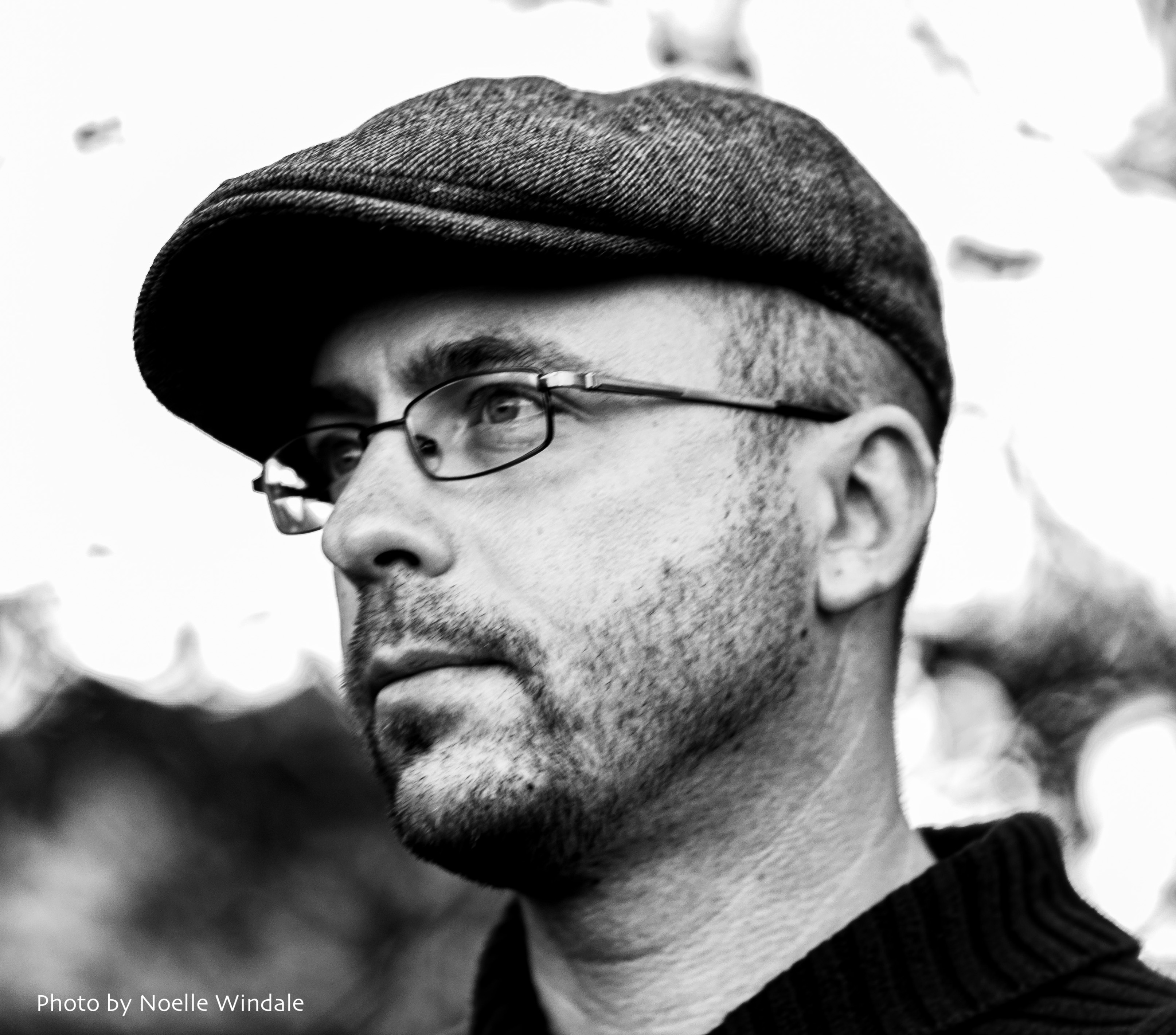
James Windale is the author of the Twenty-Five at the Lip series, Tuesday’s Gone, Just Say Maybe, and The Delirium: A Zombie Opera of the Great War.

 In April of 1994 my sister Bonnie spent a week in her room sobbing into her flannel shirt and ripped jeans because her idol, Kurt Cobain, had stuffed enough heroin up his arm to put a rhino down and then blew his face off with a shotgun. She had been something of a prude about Nirvana, slamming her door in my face when I wanted to listen with her and her friends.
 The phone ringing woke Richard from a sound sleep. It rang twice before Meg picked it up and he checked his wrist watch to see the time. It was 2:05 in the morning and he rubbed his eyes while Meg took the call. It was possible that the call could be turfed off on a EMT-Basic crew, but the feeling sitting in the pit of his gut told him he was about to be getting up.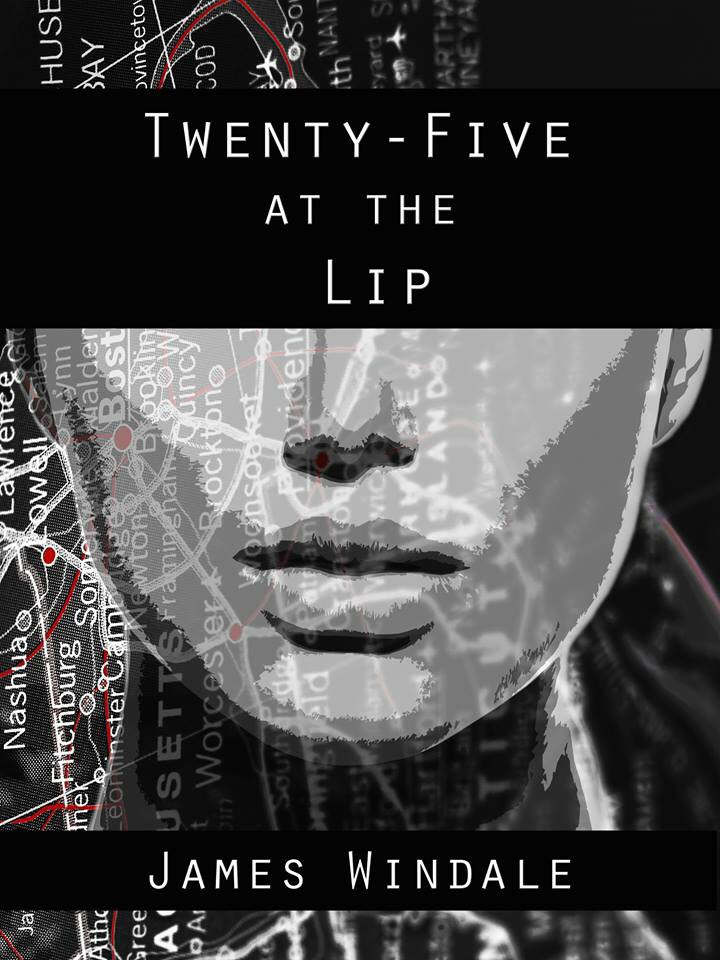



 James Windale